Day 25 – Bratislava ๐Ÿ‡ธ๐Ÿ‡ฐ to Esztergom ๐Ÿ‡ญ๐Ÿ‡บ

Countries: Slovakia and Hungary. Distance: 162km
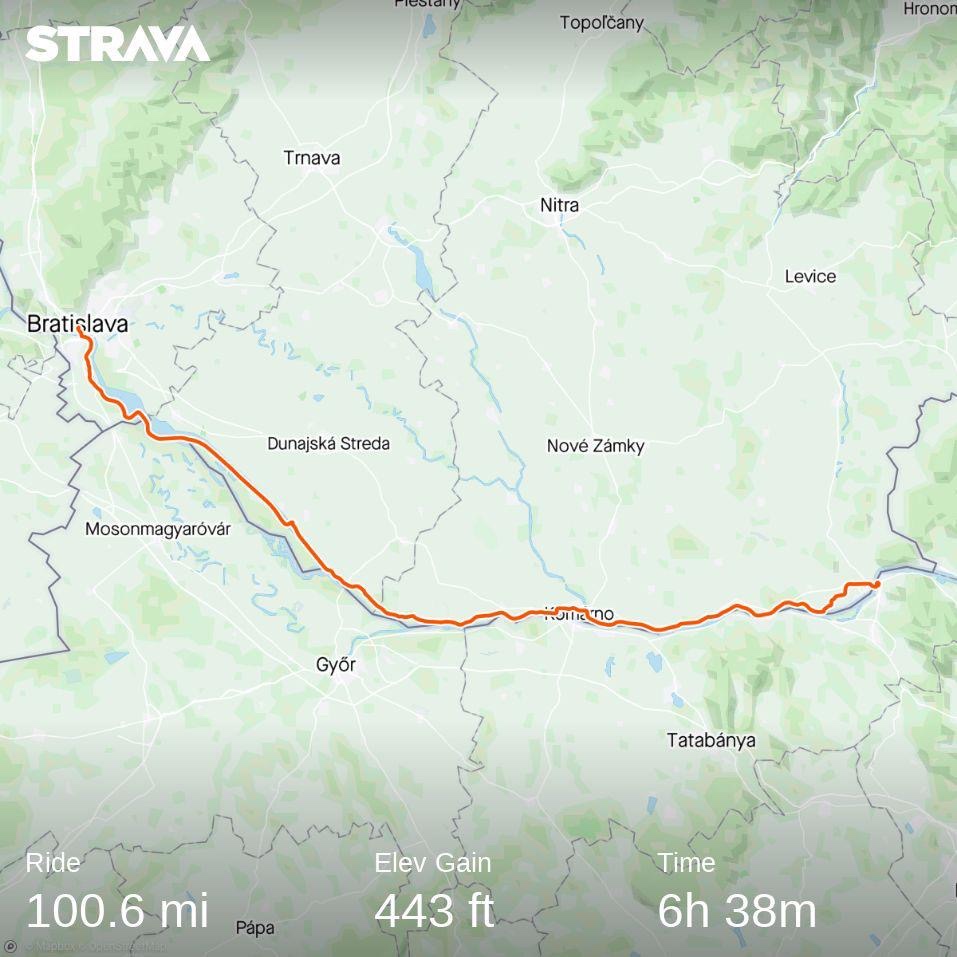
100 miles with 400ft of elevation gain. Truly a billiard table

One of the joys of cycle touring is observing as the world slowly changes around you. From the language on the road signs, to topography, to climate, these changes are sometimes subtle and sometimes pronounced. Since departing Vienna towards Bratislava, the trip has taken on a distinctively different feel from the Germanic countries preceding this section.

The wonderful Eurovelo 6 continues

Todayโ€™s route, almost exclusively in Slovakia, initially tracks the man-made edges of the Gabฤรญkovoโ€“Nagymaros Dam, before following the bends of The Danube and crossing into Hungary at Esztergom. The Danube, presumably artificially widened here, glistens in the sunshine as I pedal silently alongside the waterโ€™s edge. Well mostly silently save an expletive barrage as a wasp flies into the vent on my cycle helmet and, as a parting gift, stings my finger as I fish it out. After initially being joined by other cyclists two hours pass without seeing another person, and I grow increasingly concerned that perhaps the bridge at the far end is closed to traffic. However, these apprehensions prove to be unfounded as eventually I arrive at the towering concrete control tower, dart across the bridge and re-join the cycle path, thankful to have both feet firmly back on terra firma.

A little background about this contentious dam (disclaimer – I’m simply retelling the story the Slovakian guide shared yesterday!)

Central Europe gets hot in summer, with the mercury reaching 35C today. With no infrastructure around the path, one simply has to get their head down and push on through the heat.

Big sky
It’s hot!

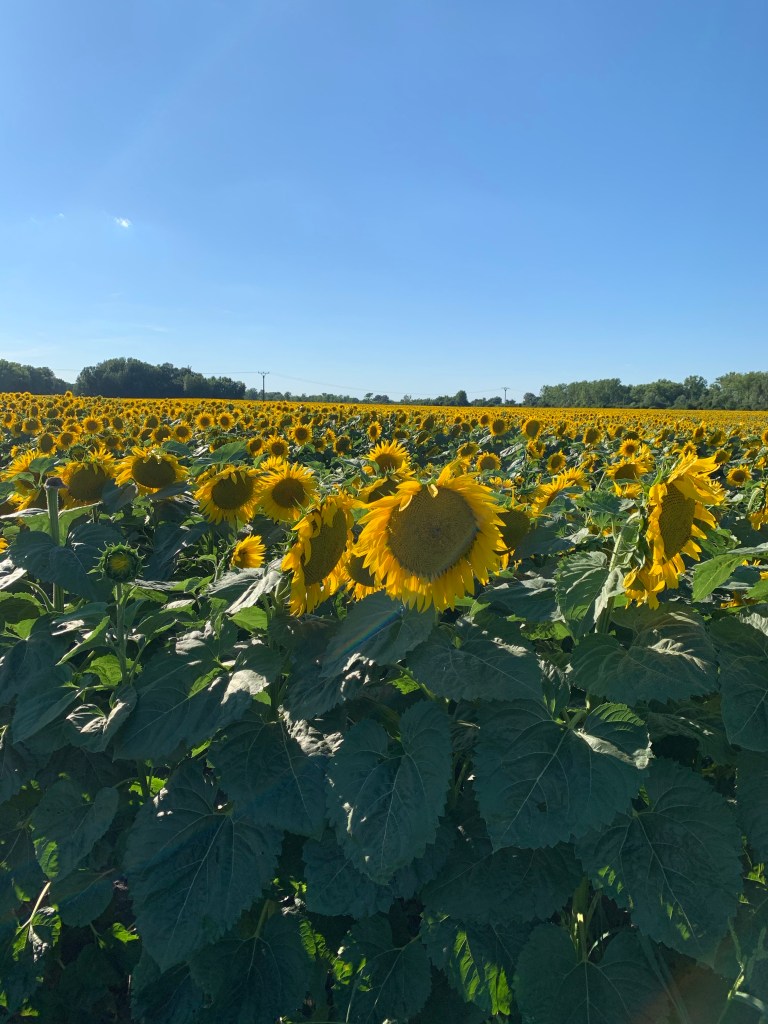
The views are pleasant, bike running well and I enjoy the hours exploring Slovakiaโ€™s countryside. Itโ€™s not until the final 10 kilometres of the day that the path degrades, slowing progress. However this is completely offset by the route passing through acres of sunflower fields and a low sun casting a golden glow over the closing miles of the day.
Where’s Vincent?

Itโ€™s time for the final border crossing of the whole trip, and weโ€™ve undoubtedly saved the best for last.

Welcome to Hungary
Yeah, I’m still not over this!

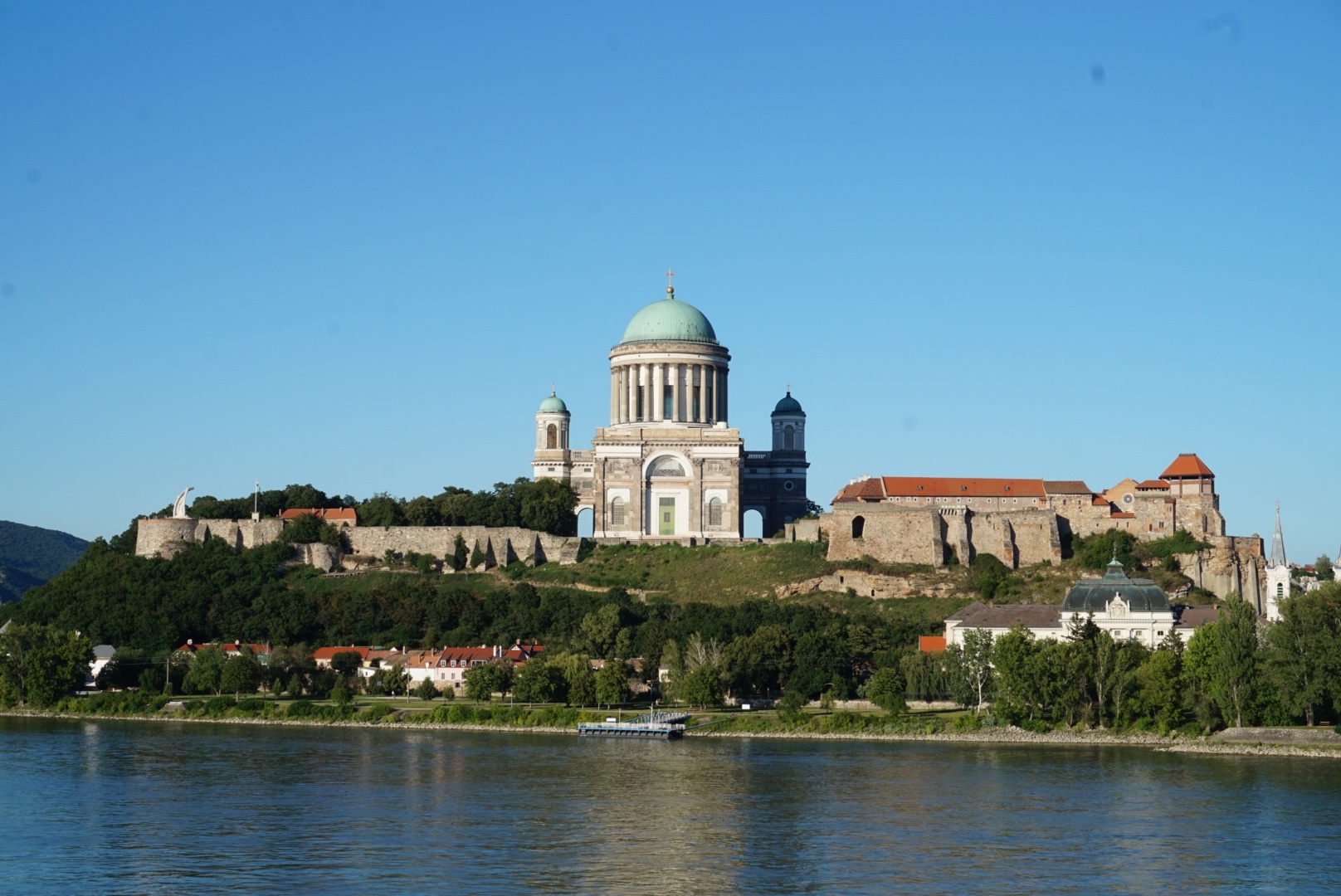
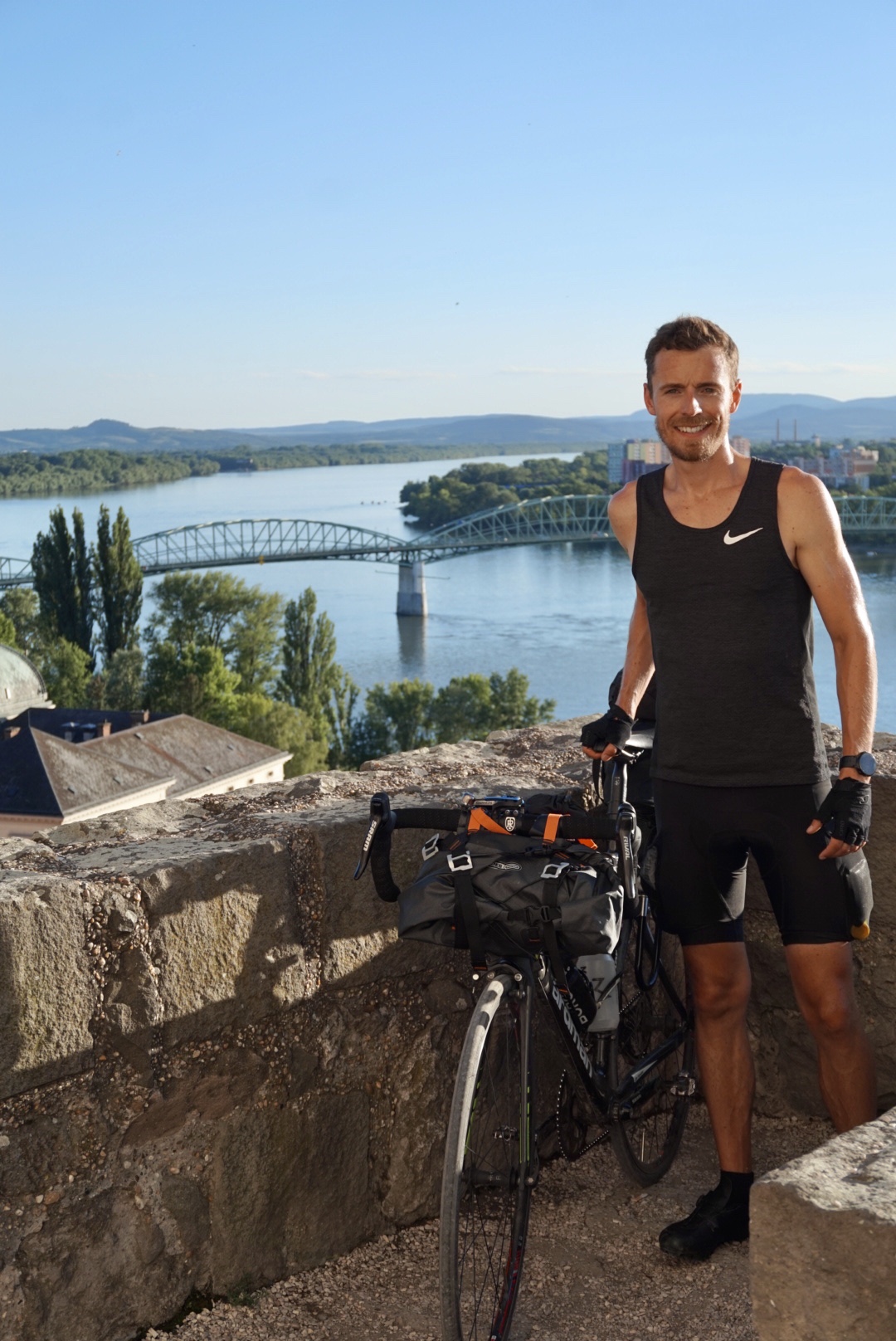
Sat strategically astride the right bank of the river Danube is the city of Esztergom, former capital (from the 10th till the mid-13th century) and home to the tallest building in Hungary, the magnificent Esztergom Cathedral. As you cross from ล tรบrovo, this striking and majestic structure (similar in scale and design to Londonโ€™s St Paulโ€™s Cathedral) dominates the view and provides a truly awe-inspiring welcome. If this is to be the final border crossing this trip, itโ€™s an unforgettable one. The stage is set for a memorable final day.
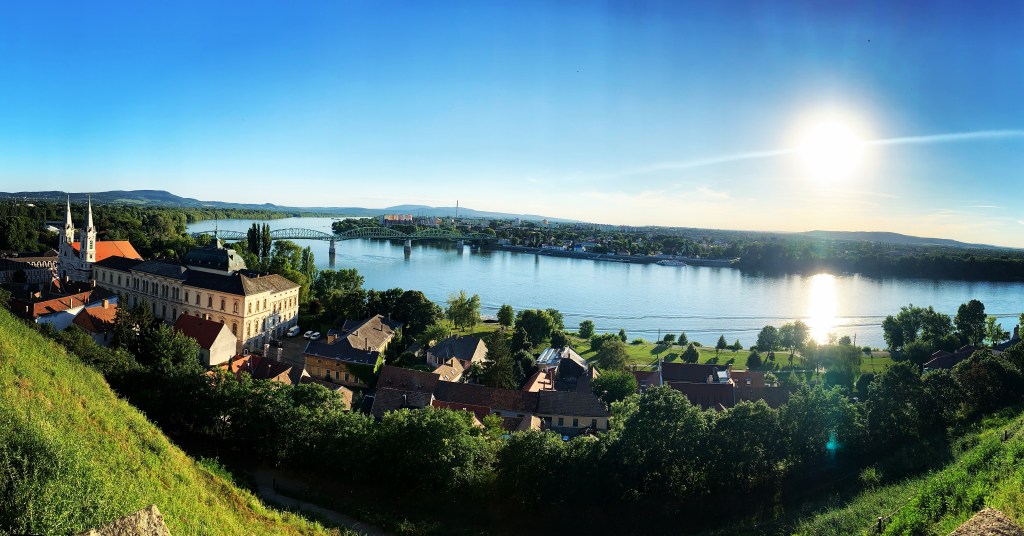
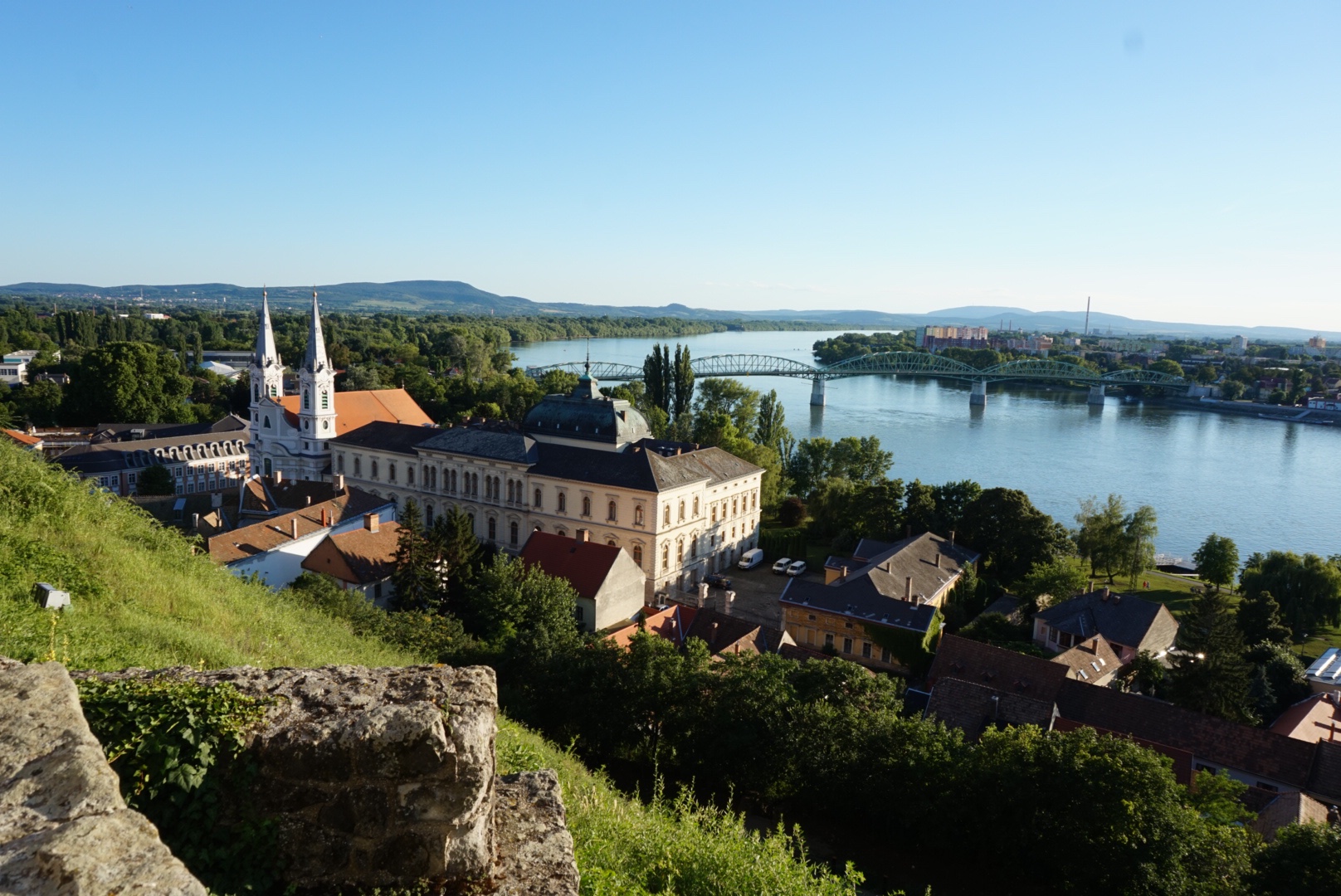
Looking back at where I’ve come from – the stunning curve of the Danube

Days 23 and 24 โ€“ Vienna to Bratislava, Bratislava Rest Day ๐Ÿ‡ฆ๐Ÿ‡น ๐Ÿ‡ธ๐Ÿ‡ฐ

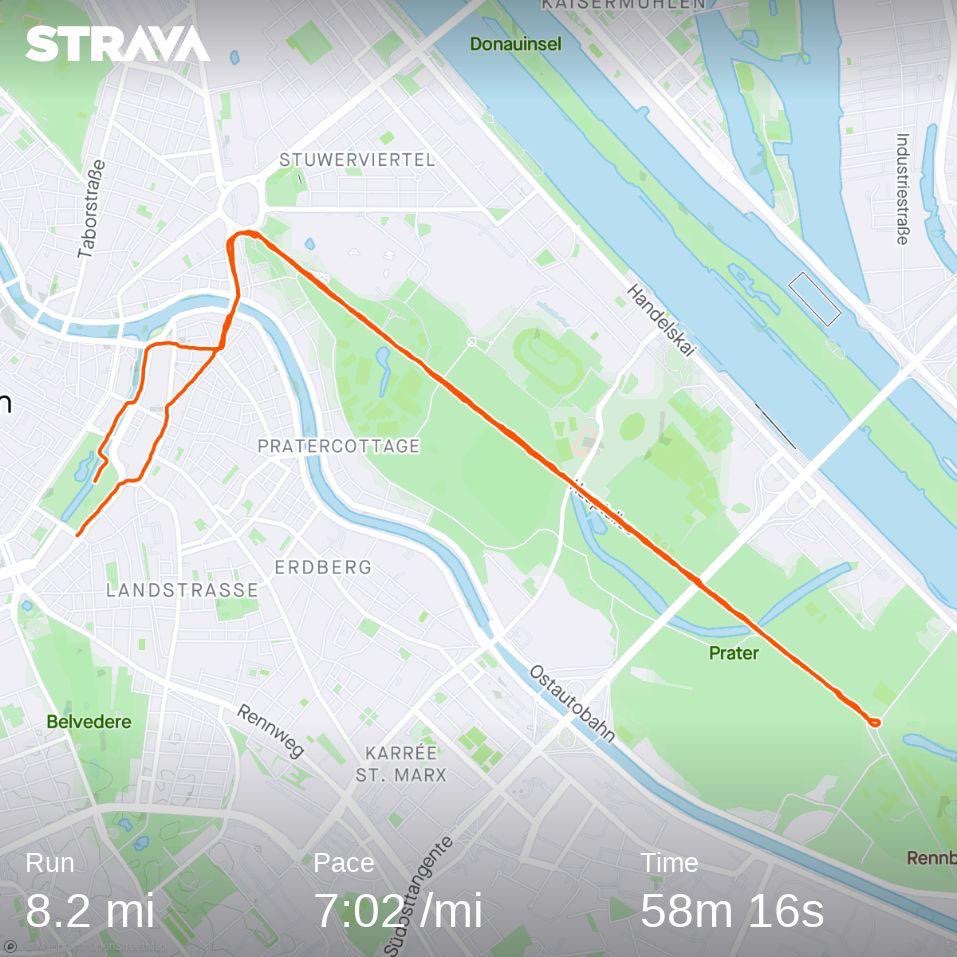
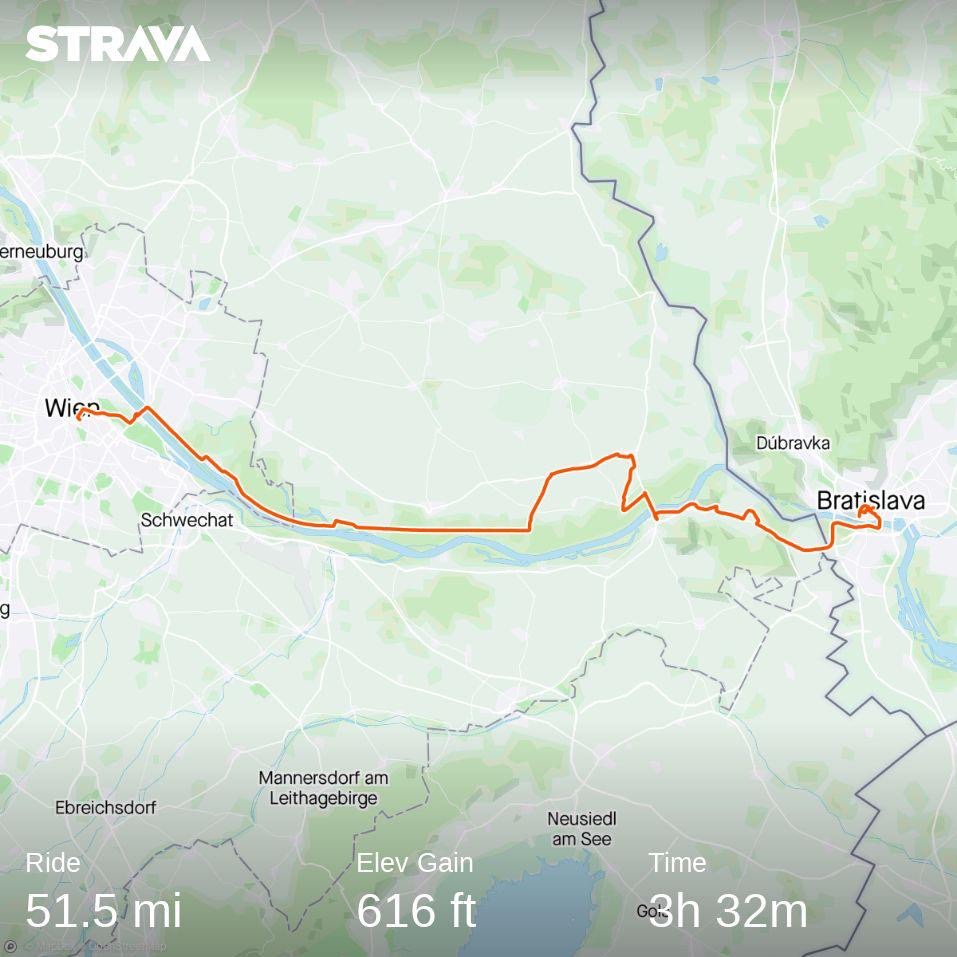
Countries: Austria and Slovakia. Distance: 13km run and 83km bike

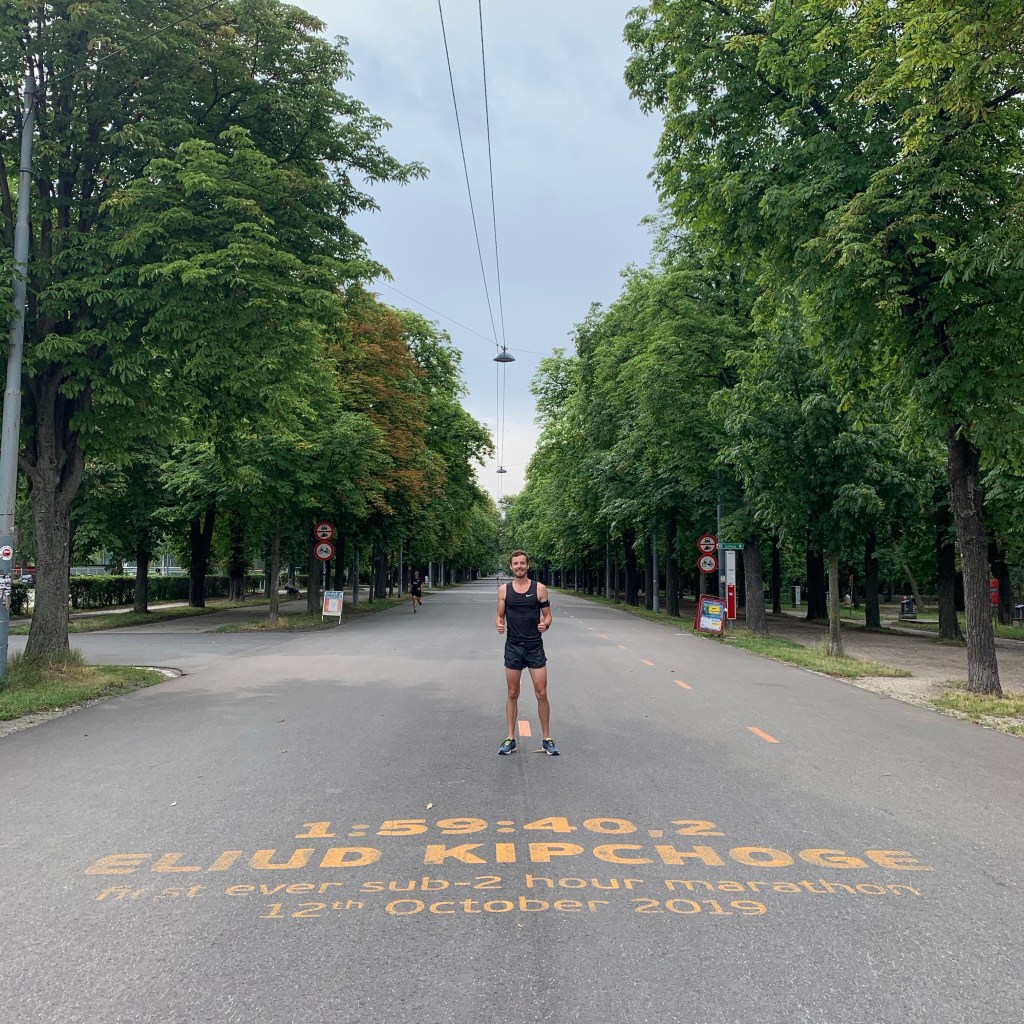
In October 2019 Kenyan running superstar Eliud Kipchoge became the first human to complete a marathon distance (26.2 miles/42.2 kilometres) in under 2 hours. Previously thought to be impossible, this mind-bending feat of athleticism has become part of running folklore, mentionable in the same breath as other watershed feats such as Bannisterโ€™s breaking of the 4-minute mile. As opposed to the latterโ€™s completion on cinders at Oxford University’s Iffley Road Track, Kipchogeโ€™s achievement occurred here, through the cityโ€™s Prater Park โ€“ locally referred to as โ€˜The Green Lung of Viennaโ€™. As a marathoner myself Iโ€™m keen to run, figuratively, in his footsteps.

“No Human is Limited” – I’m not sure the locals realised what all the fuss was about

Upon reaching Prater itโ€™s clear to see exactly why this was selected. Pan flat, perfectly straight, tree lined and closed to motorised traffic. Aside from the parkโ€™s historic relevance, itโ€™s simply a beautiful place to go for a run. Those who watched Kipchoge will recall memorable scenes as he accelerated towards the line, beating his chest once he knew he was going to break the record. To my mind, this deserves a grand monument, but is instead memorialised by a spray-painted 1:59:40 across the road. Satisfied and grateful for having had the opportunity to soak up this little bit of running history, I head back to the hotel to pack and prepare for a spin toward the unknown: Bratislava.

Just 50 miles separate the capitals of Austria and Slovakia, so itโ€™s back to Eurovelo 6 and the predictable, billiard flat cycle path alongside The Danube. Stacking the deck even further in my favour is a stiff West to East tailwind, which sees me hitting the dizzy heights of 20mph most of the way (unheard of with all this luggage).

Tailwinds and blue skies

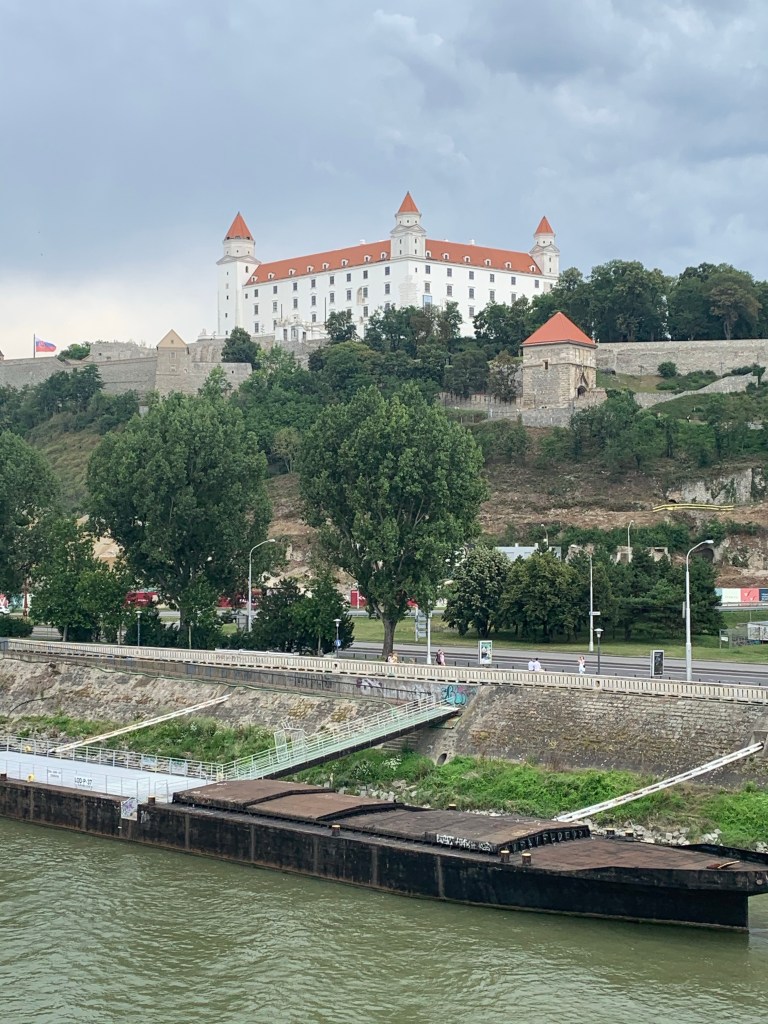
The border between Austria and Slovakia passes in unspectacular fashion. Austrian countryside is much the same as Slovakian countryside, but as you approach the city the changes become more pronounced. There are two sights that stand out as you approach: Bratislava Castle, an almost fairytale-esque renaissance style fortress juxtaposed against the incongruously intimidating โ€˜UFOโ€™ bridge โ€“ a brutalist metallic Soviet style structure. Itโ€™s clear from the outset that Bratislava is a city of contrast.

UFO bridge
Juxtaposed with a fairytale castle!

After a brief cycle up to the castle to take a few photos, I head to my โ€˜podโ€™ hostel. Promising early impressions โ€“ very clean, outrageously cheap and well located. The pod design affords a greater degree of privacy than a standard dorm, with card operated lockers, USB charging and other thoughtful touches.

Hello from Bratislava Castle

Another day another walking tour hosted by an impressive, knowledgeable and enthusiastic polyglot. The history of Bratislava is fascinating, largely comprising of occupation and liberation (ranging from Ottomans, Turks, Habsburgs, and Napoleon to the Soviets), with each group leaving a mark on the city. The last of which ended in 1993 following the dissolution of Czechoslovakia. It has an attractive old town, friendly people and is well worth a visit.

Panorama

A key benefit of hostelling is the people you meet. I was lucky to be rooming with 2 engaging characters: an MBA candidate from Paris, currently driving through Europe prior to starting his studies and a member of the Slovenian military, visiting friends across the continent. With the three of us each having interesting stories to tell we made the most of the cheap beer on offer (โ‚ฌ1.50/pint, if you wondered) and made a night of it. A fitting farewell to Slovakia before crossing into the final country of the trip, Hungary, tomorrow.

Cheers